Get gritting right for the winter
As we head into the darker winter months, local authorities and organisations across a range of sectors from hospitality to healthcare, are preparing for the challenges that the colder weather brings.
One of these challenges is the increase in the number of icy roads and paths as temperatures drop. These highways and walkways often require gritting during cold spells to ensure health and safety standards are met. However, with the unpredictability of the British weather, this can be a tricky task for councils and other public facing organisations.
Meeting the gritting challenge
It’s advisable to review your needs and current situation by conducting winter gritting risk assessments before the weather turns. This helps to highlight areas on a site or within a region where gritting is likely to be necessary. Identifying these places can help ensure that grit bins and supplies are placed in the right locations. On roads for example, gritting is often likely to be needed on high ground and areas with steep inclines. On other sites such as hospitals or universities, grit bins might need to be located by wheelchair ramps. Assessments can be carried out by walking the site as well as asking users for feedback and suggestions on potentially hazardous areas and places with high footfall and/or traffic.

Grit bins to the rescue
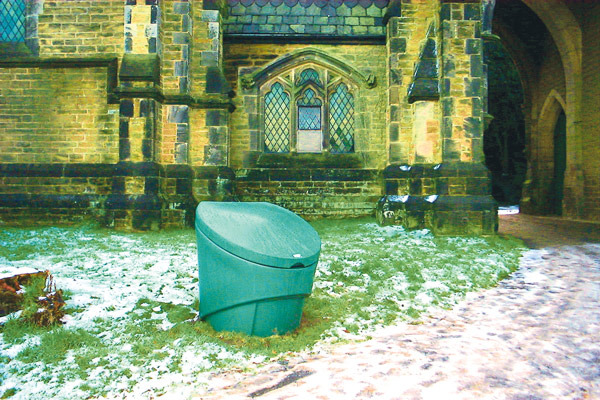
It’s important to have a fleet of grit bins on standby for use in places of concern identified in the gritting assessment. Grit bins can then be located near to sites prone to icing over for public use. Some bins can be permanently placed, whilst others can be kept in reserve as most bins can be moved using fork lift trucks.
It’s essential that the grit in the bin (which is often mined brown salt), is kept dry, so grit bins need sturdy lids which stay closed. Gritting salt is more effective if it’s kept dry before it’s spread because exposure to water will dissolve and reduce the salt concentration. Moisture will also cause rock salt to form clumps which have to be broken up before it can be used to ensure that the salt spreads evenly.
Choosing the right grit bin
Amberol’s range of grit bins and boxes come in three different sizes, making them suitable for a variety of public locations including schools and shopping centres as well as footpaths and roadside verges. Our standard bins are bright yellow to enhance visibility, but other colours are available. Being made from recyclable polyethylene, they also have great environmental credentials;
400L Grit Bin (400kg of grit or salt)
250L Grit Bin (250kg of grit or salt)
200L Grit Bin (200kg of grit or salt)
Getting ready for the wintry weather
Many councils have been stocking up on salt reserves to ensure that they have enough for the winter. For example, Amberol’s home county of Derbyshire has 30 gritting lorries in its fleet as well as 25,000 tonnes of grit in storage, with staff already on standby in preparation for a sudden cold snap as the weather worsens. Derbyshire also has 2,000 grit bins located across the county.
Unpredictable weather does make the process of gritting difficult to manage as it’s crucial to spread salt before the surface freezes. However, advances in technology have also made the process of gritting easier with weather forecasting and ice production software now available to highways departments.
How Amberol can help
If you would like more information about the Amberol range of grit bins, please call us on 01773 830 930 or email sales@amberol.co.uk to make sure that you are well prepared for the colder winter weather.