Save the bees!
They are a quintessential part of the British summer and an extremely important part of the world’s ecosystem, but sadly the bumblebee population is in decline.
The UK has around 270 species of bee, 24 of which are bumblebees, characterised by their fat and furry appearance. Unlike the honeybee, the bumblebee makes only a small amount of a honey like substance which it eats itself. However, its existence is extremely important to all sorts of wildlife as it pollinates many different species of plants, playing a vital role in the food chain by contributing to the production of many crops.
In fact, according to renowned naturalist Sir David Attenborough, who is a supporter of the Bumblebee Conservation Trust, “If they disappear, many of our plants will not bear fruit.” Pollinating crops by other methods is possible but expensive, meaning that the cost of fruit and vegetables would be likely to rise significantly.
Bumblebees also play a key part in the reproduction of wildflowers by helping to pollinate them. As wildflowers are often the foundation of complex food chains, their decline would have an impact on many forms of wildlife such as other insects, birds and mammals.
Both bumblebees and honeybees are in serious decline and two species have already been lost. One problem is loss of habitat, as so much of the UK’s flower rich grassland has been destroyed or turned over to construction or food production since the 1930s.
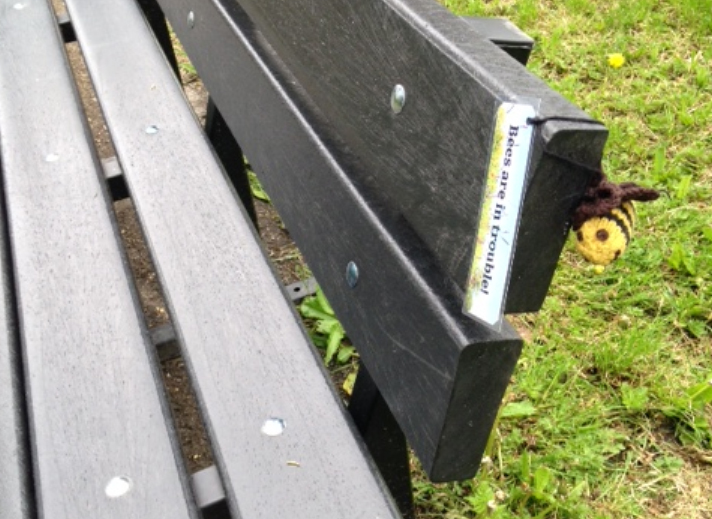
The Derbyshire Wildlife Trust is just one of many organisations campaigning to raise awareness of this issue. As part of the campaign, the trust has placed hundreds of little woollen bees around the region to draw attention to the bees’ plight and to help raise £50,000 to help protect them. For more information, visit www.derbyshirewildlifetrust.org.uk/bees.
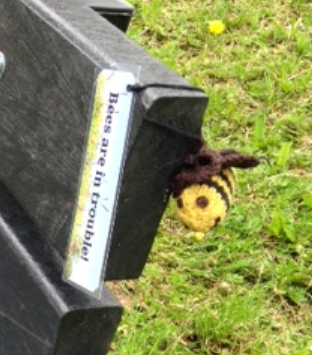
Here’s one we found near Amberol HG on one of our very own Plaswood benches in Watch Horn Park in Alfreton. The benches have been introduced as part of the park’s restoration project.
“We have been hearing about the decline of bees for many years, but few people realise what an important issue this is for everyone,” comments Amberol’s MD Patience Atkinson-Gregory. “Bees may be small and considered a nuisance by some, but without them our environment will undoubtedly suffer.”
The RHS is another organisation keen to raise awareness of the decline of the bumblebee. They have compiled three downloadable plant lists to help gardeners identify pollinating plants to attract bees. Visit www.rhs.org.uk/science/conservation-biodiversity/wildlife/encourage-wildlife-to-your-garden/plants-for-pollinators for more information.